
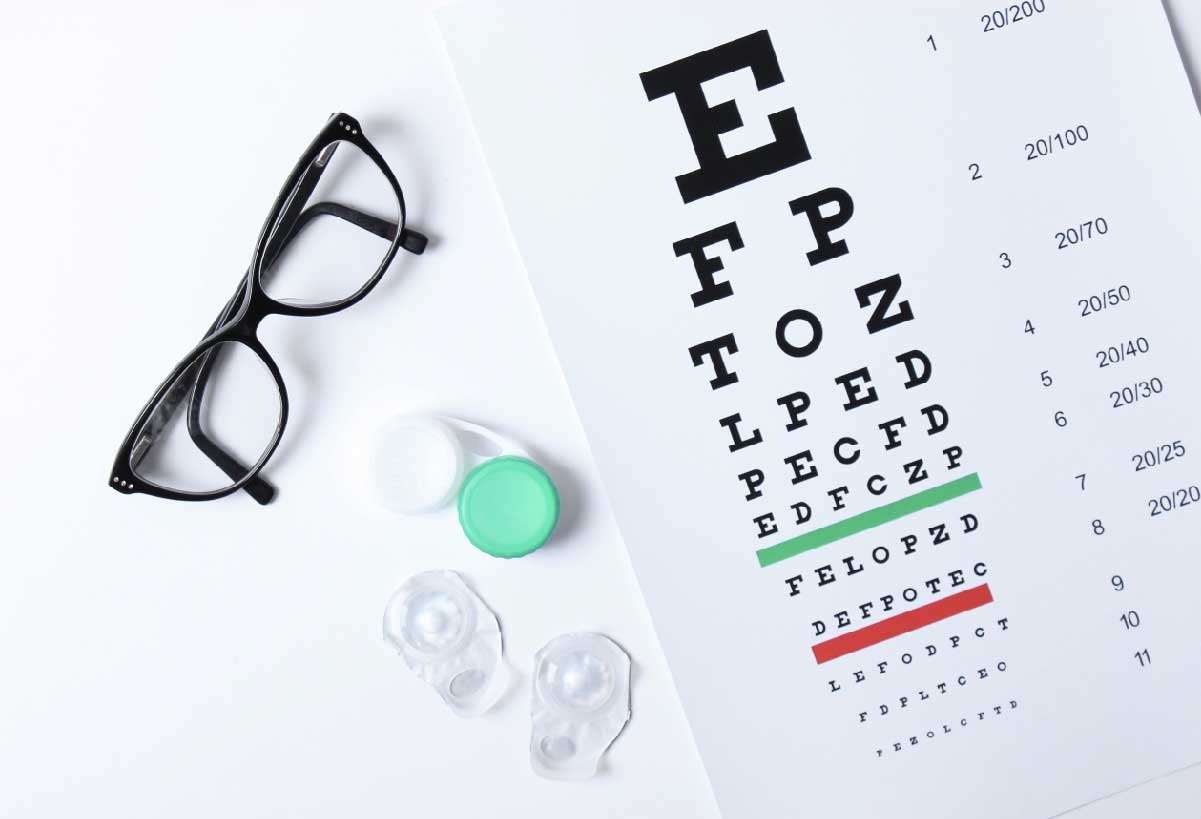
Before purchasing contact lenses or eyeglasses, it’s recommended to visit an eye doctor for an eye exam. This will help determine your eye parameters and provide you with a prescription, commonly referred to as a vision prescription or Rx.
Note: Prescriptions for eyeglasses and contact lenses differ due to the way they correct vision.
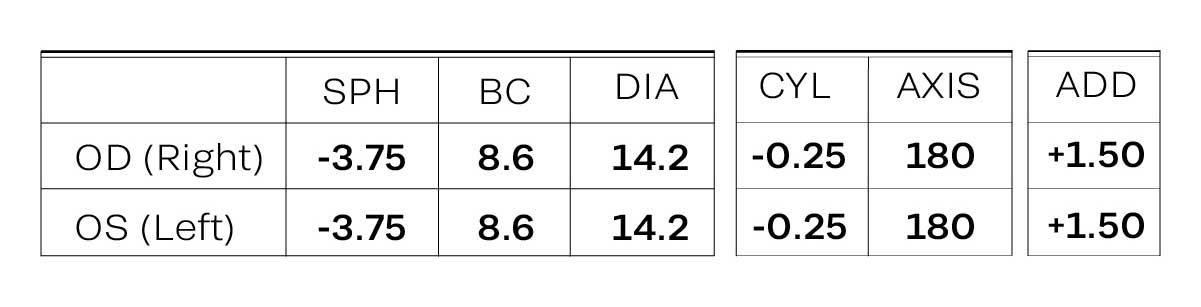
Your RX prescription for contact lenses will normally appear like this:
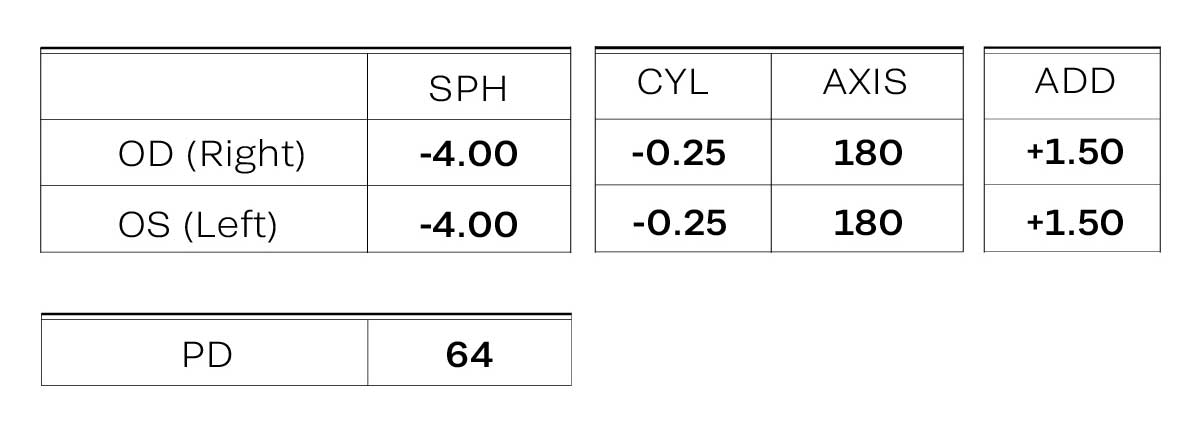
Your RX prescription for eyeglasses will normally look like this:
① Myopia/Hyperopia:
Your prescription will show SPH (Power) with a minus (-) for nearsightedness or a plus (+) for farsightedness.
*OD (Right Eye)/OS (Left Eye): These abbreviations specify which eye the prescription applies to.
For contact lenses, you’ll also have measurements like BC (Base Curve) and Dia (Diameter) to match your eye shape and ensure the right fit.
② Astigmatism:
This section shows if you need correction for astigmatism. It will include CYL (Cylinder) and AXIS values. If necessary, toric contact lenses or special lenses for astigmatism will be recommended.
③ Progressive:
Usually marked with plus (+) values, this means you need correction for both near and far vision. In this case, multifocal contact lenses or progressive lenses will be suggested.
④ PD (Pupillary Distance):
(Only needed for prescription eyewear) This measurement tells the distance between your pupils to make sure your glasses are properly aligned for the best vision through your prescription lenses.
Understanding these prescription components will help you select the contact lenses or eyeglasses that best meet your vision needs.